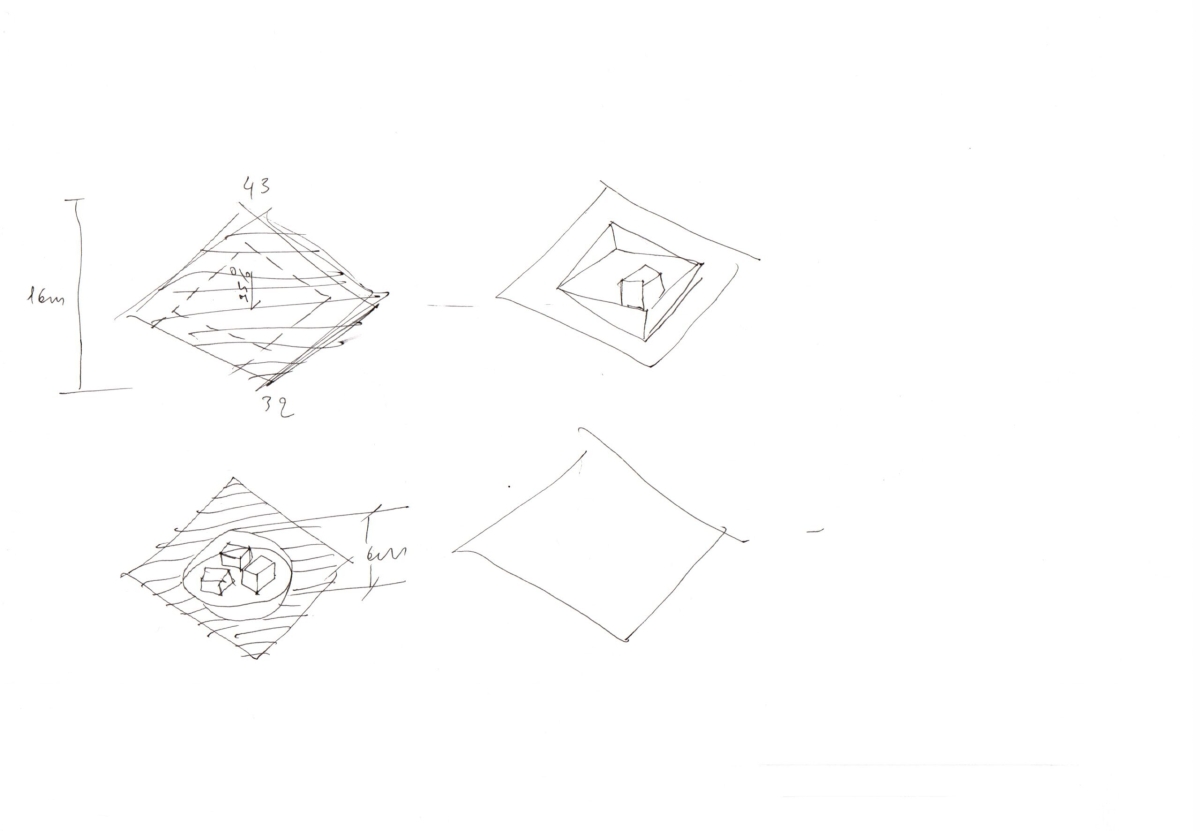
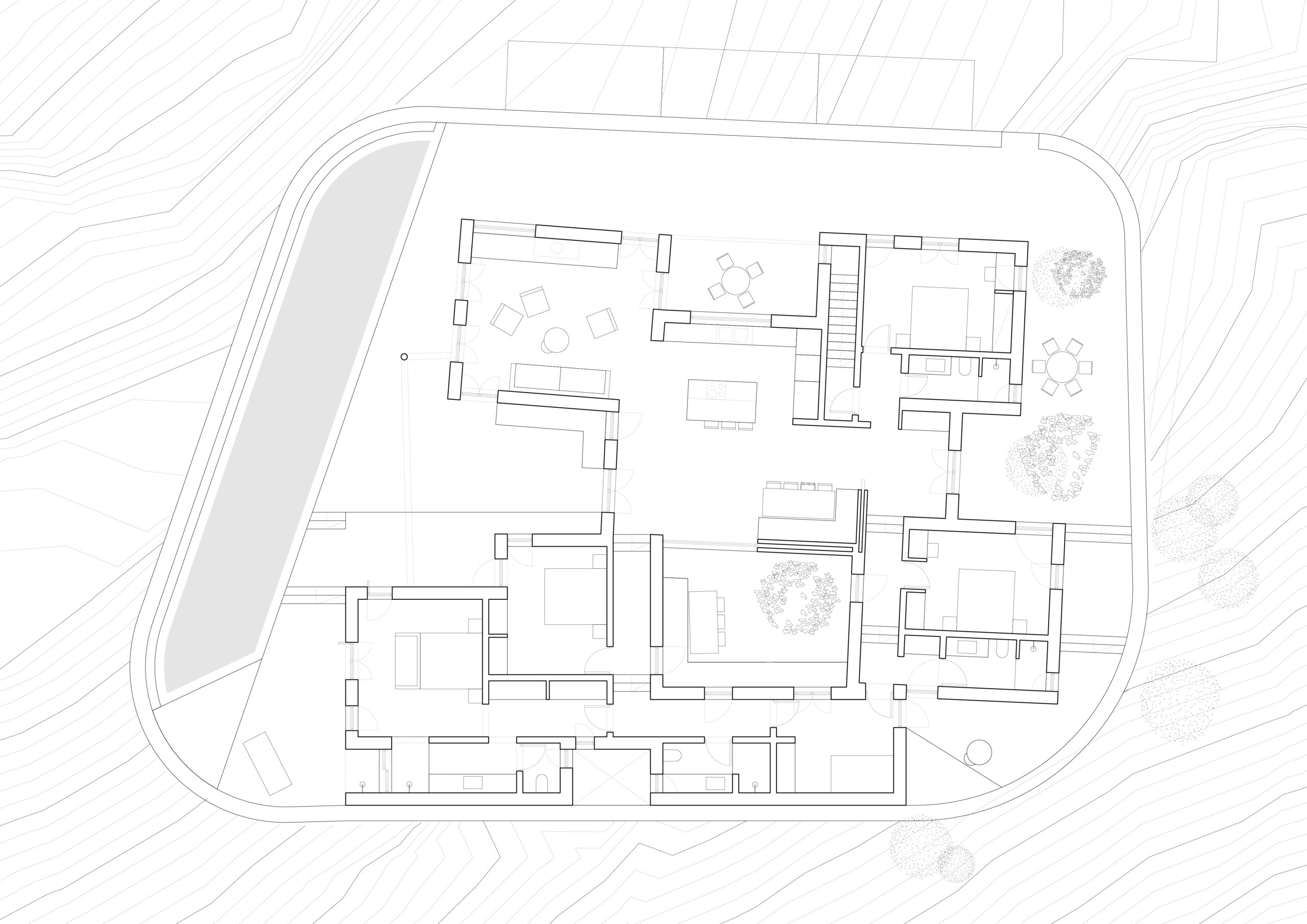
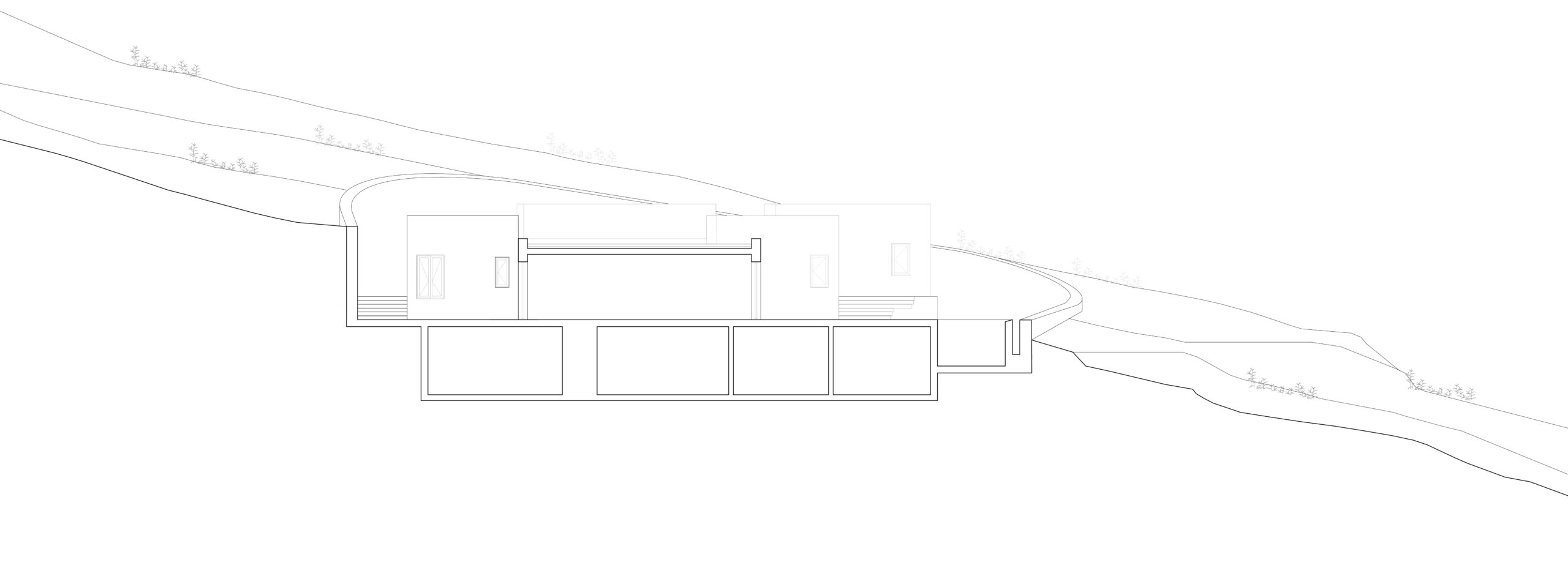
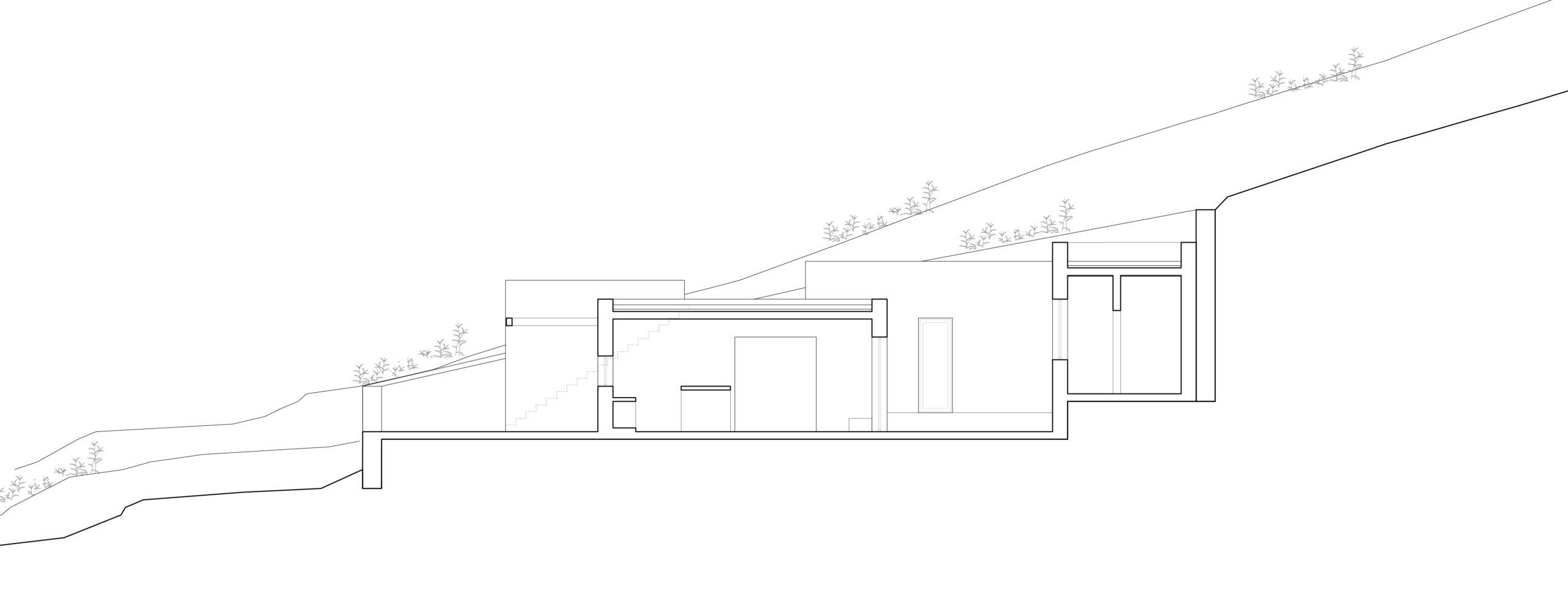
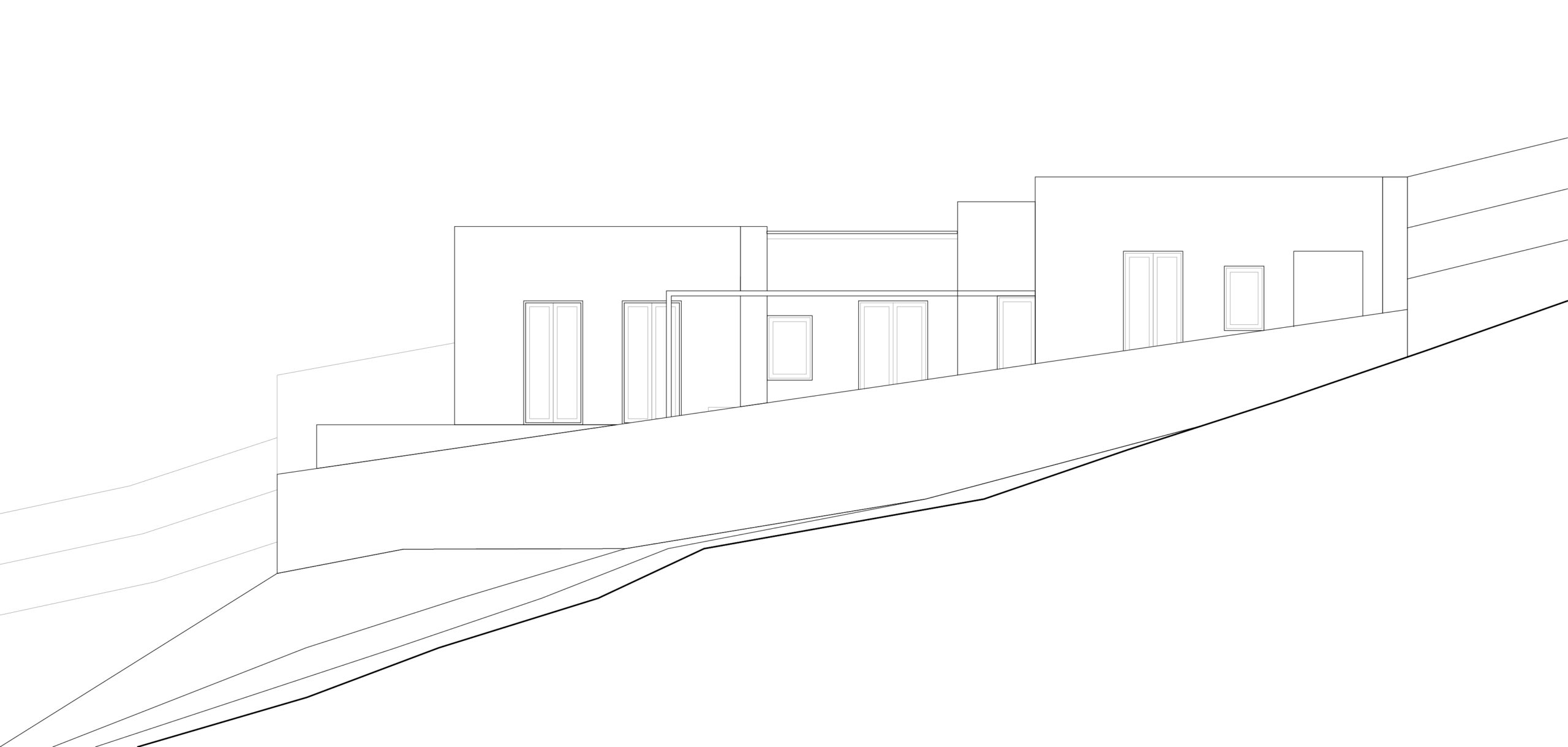
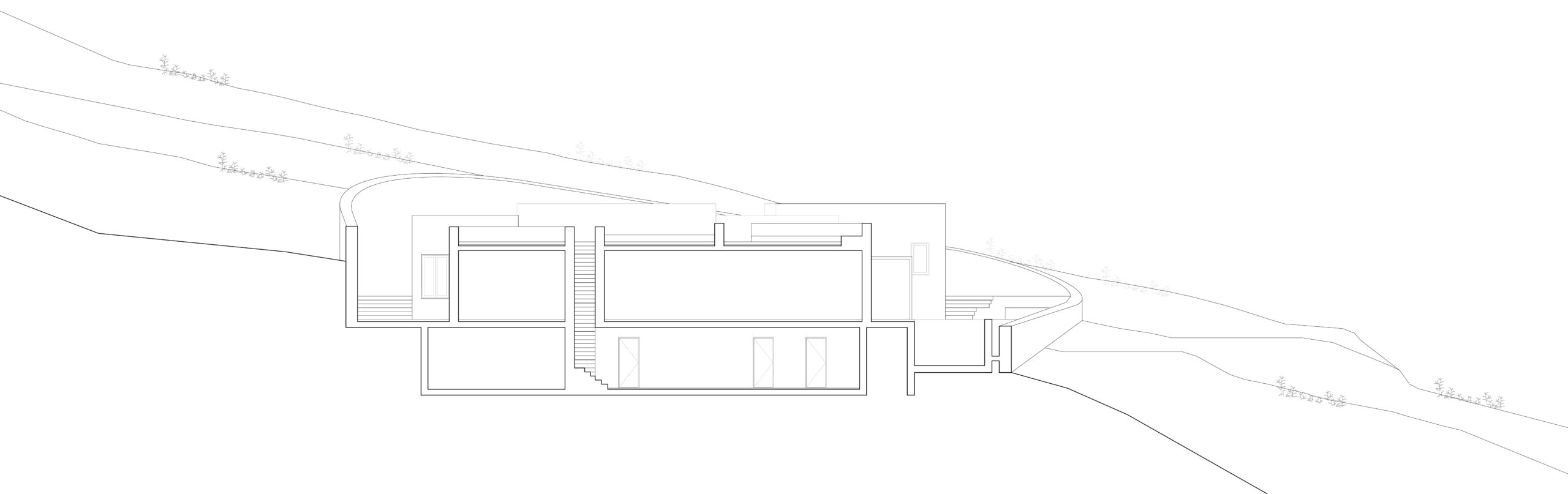
The residence is composed of seven cubic volumes arranged primarily on a single level, with subtle height variations that follow the natural slope of the site. A continuous stone retaining wall traces the steep terrain, enclosing the volumes in a serpentine gesture. Acting as a threshold between landscape and architecture, the wall preserves the site’s topography while minimizing the visual and physical impact of construction.
Within this protected perimeter, the volumes are organised around a central atrium, alternating between open and shaded spaces. The configuration recalls the spatial logic of Cycladic village clusters, where independent elements come together to form a cohesive whole. This arrangement ensures generous natural ventilation, controlled daylight, and a constant dialogue between interior and exterior spaces.
Each volume accommodates a distinct function. To the northeast, three volumes house the living room, kitchen, and a bedroom with its associated bathrooms. The kitchen is set back from the main enclosure, creating a shaded outdoor threshold that connects directly to the atrium and supports daily life across indoor and outdoor settings. The remaining volumes contain four bedrooms and three bathrooms, offering privacy while maintaining proximity to the shared core of the house.
The main outdoor living area, including the swimming pool, is positioned on the northwest side of the plot at an elevation of 38.50 metres above sea level. Anchored in stone and shaped by climate, topography, and inhabitation, the house proposes a contemporary interpretation of Cycladic domesticity — measured, grounded, and quietly independent.