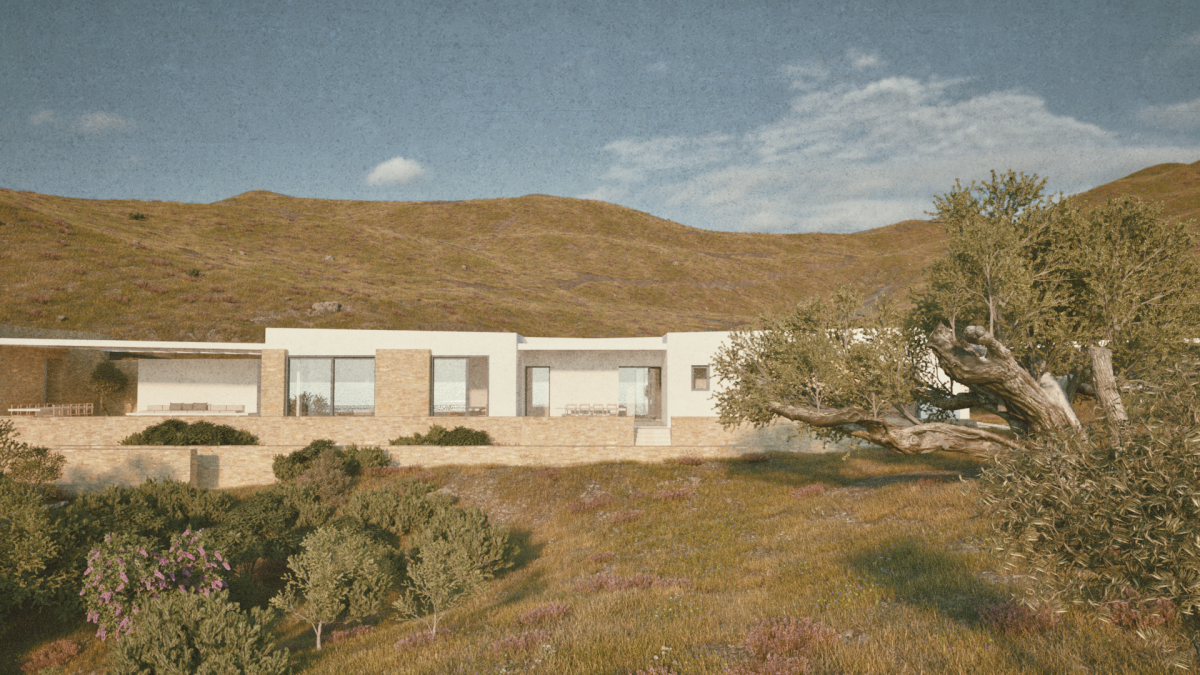
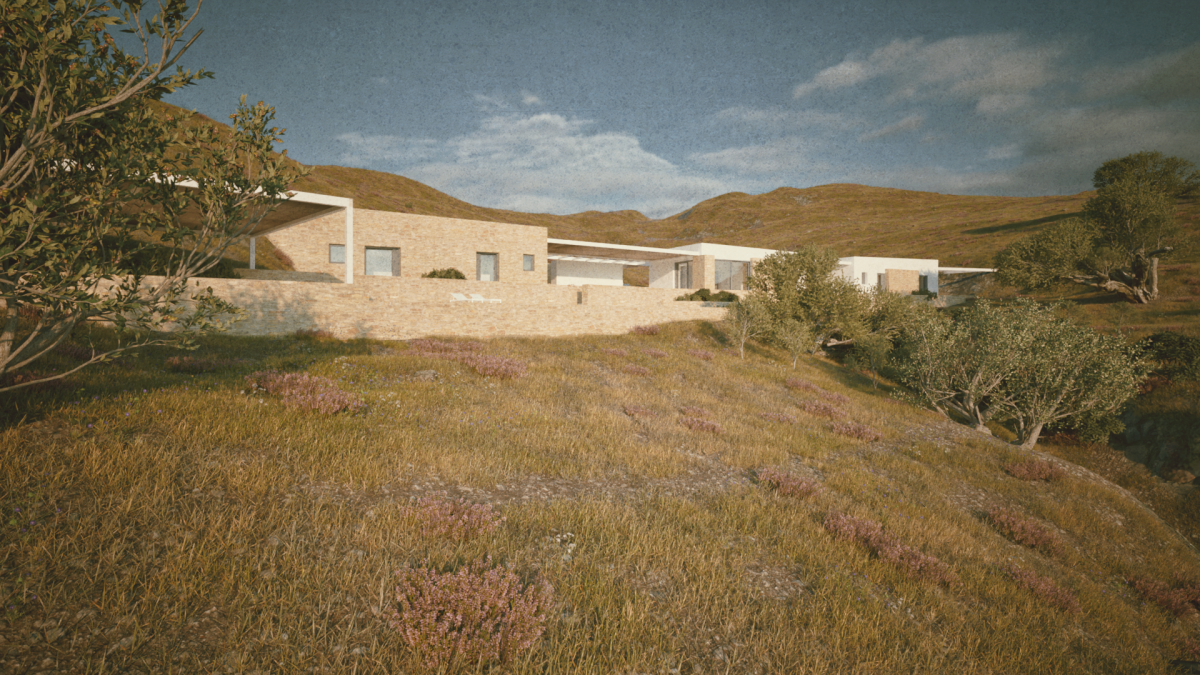
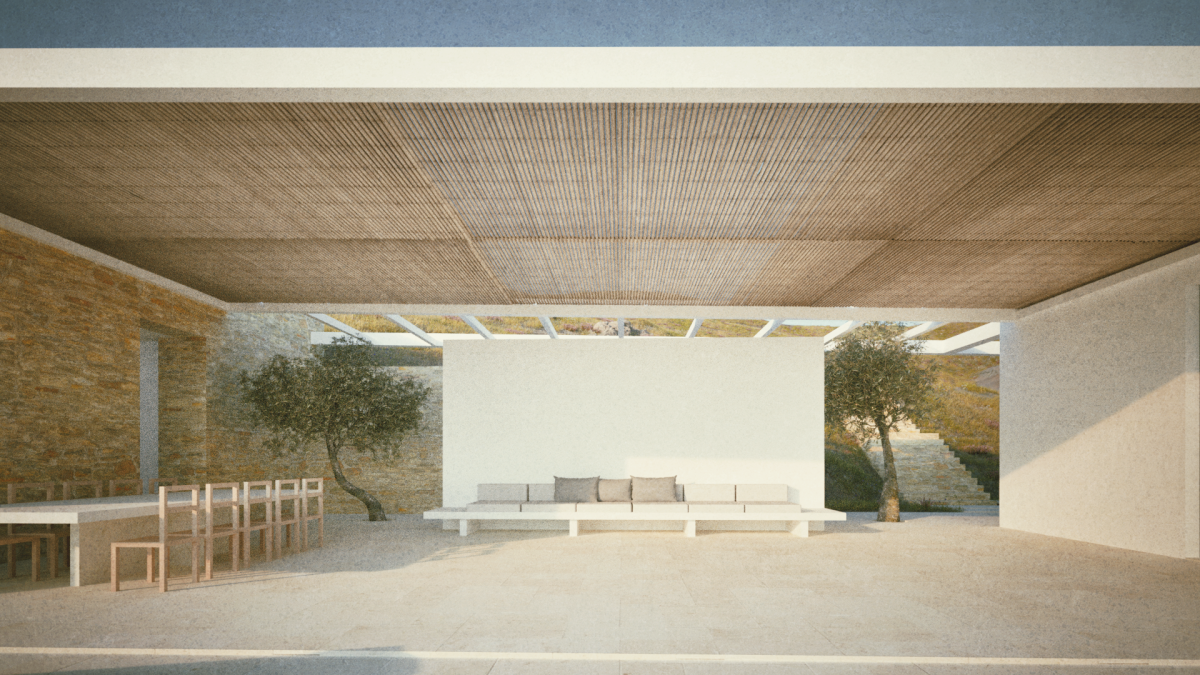
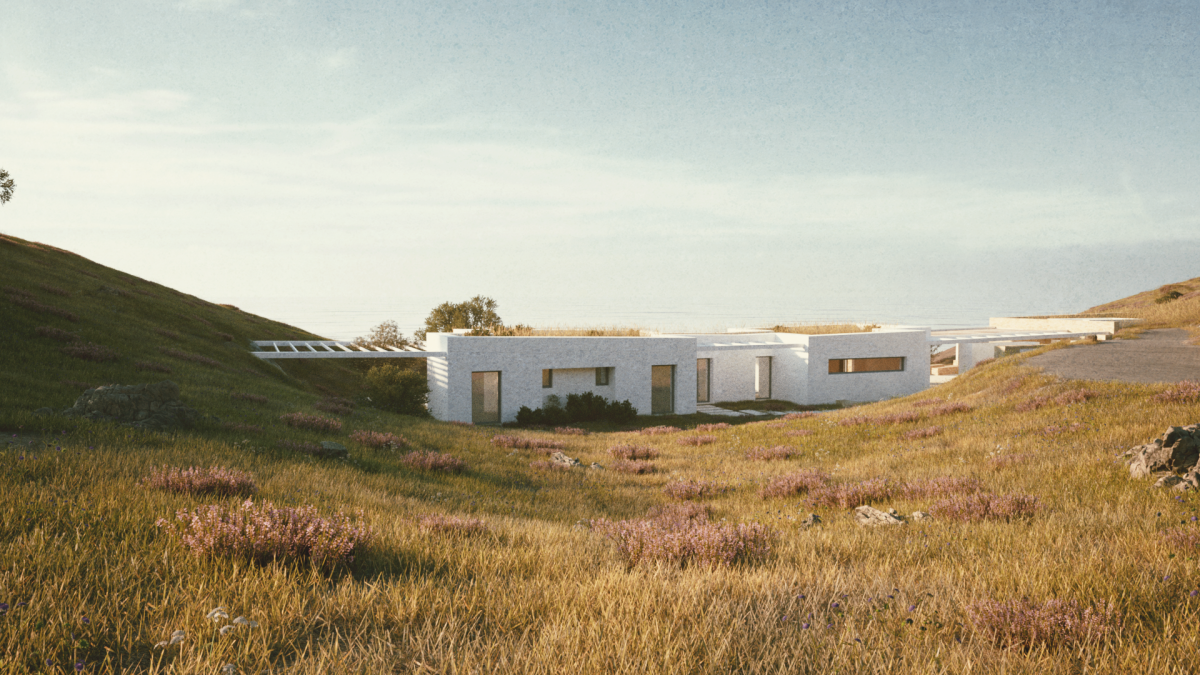
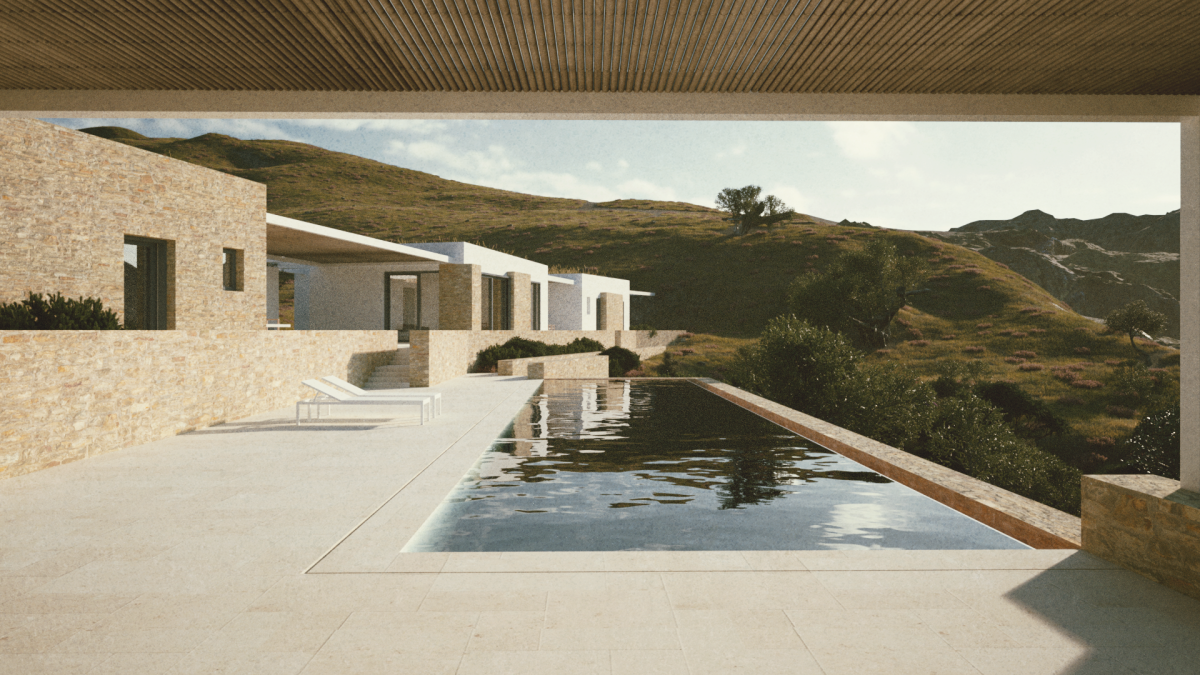
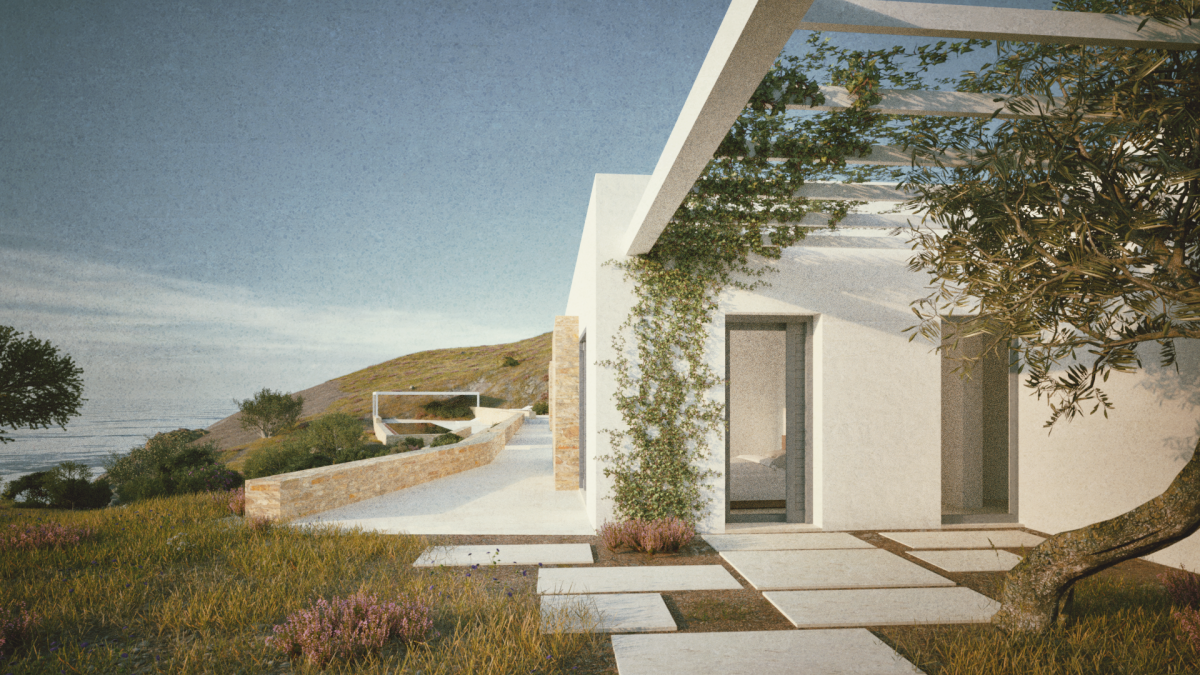
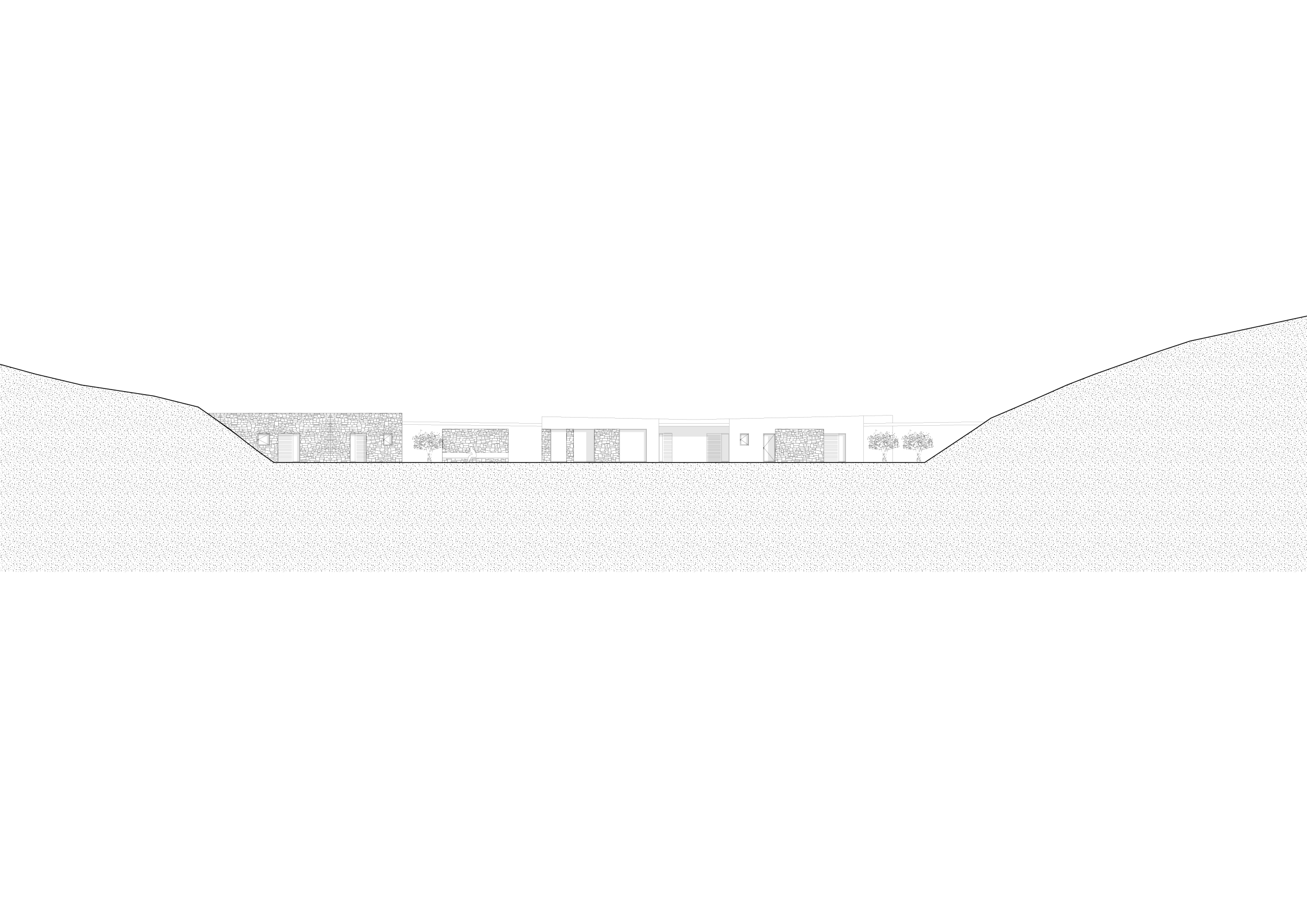
Ravine House is a private residence designed in close dialogue with the natural topography of its site. Rather than imposing a single volume, the project unfolds along the terrain, allowing architecture and landscape to develop together.
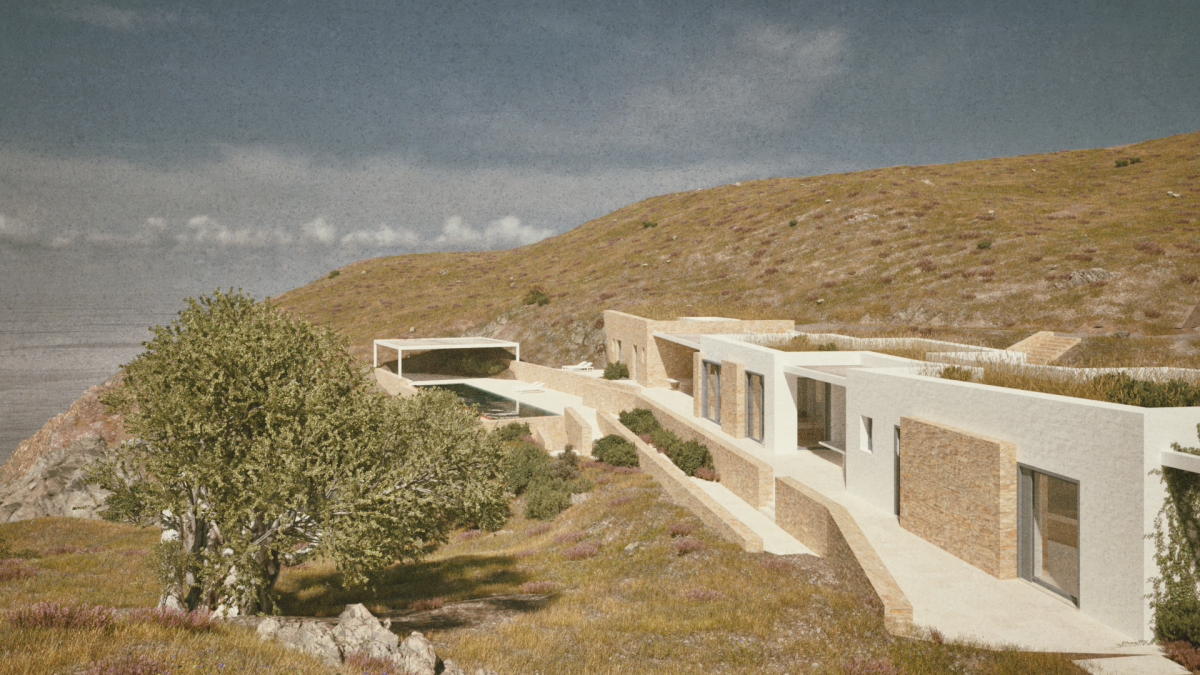
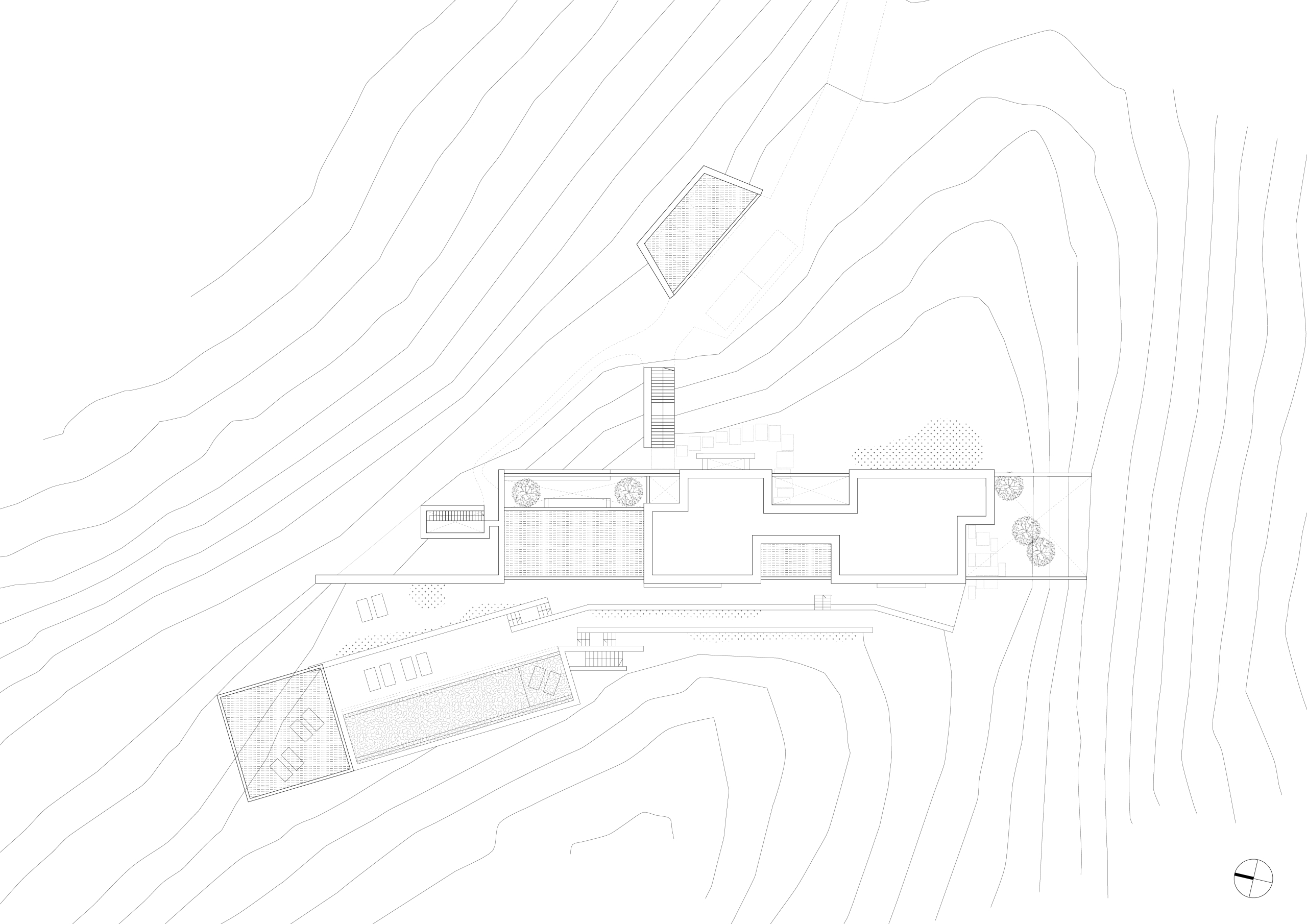
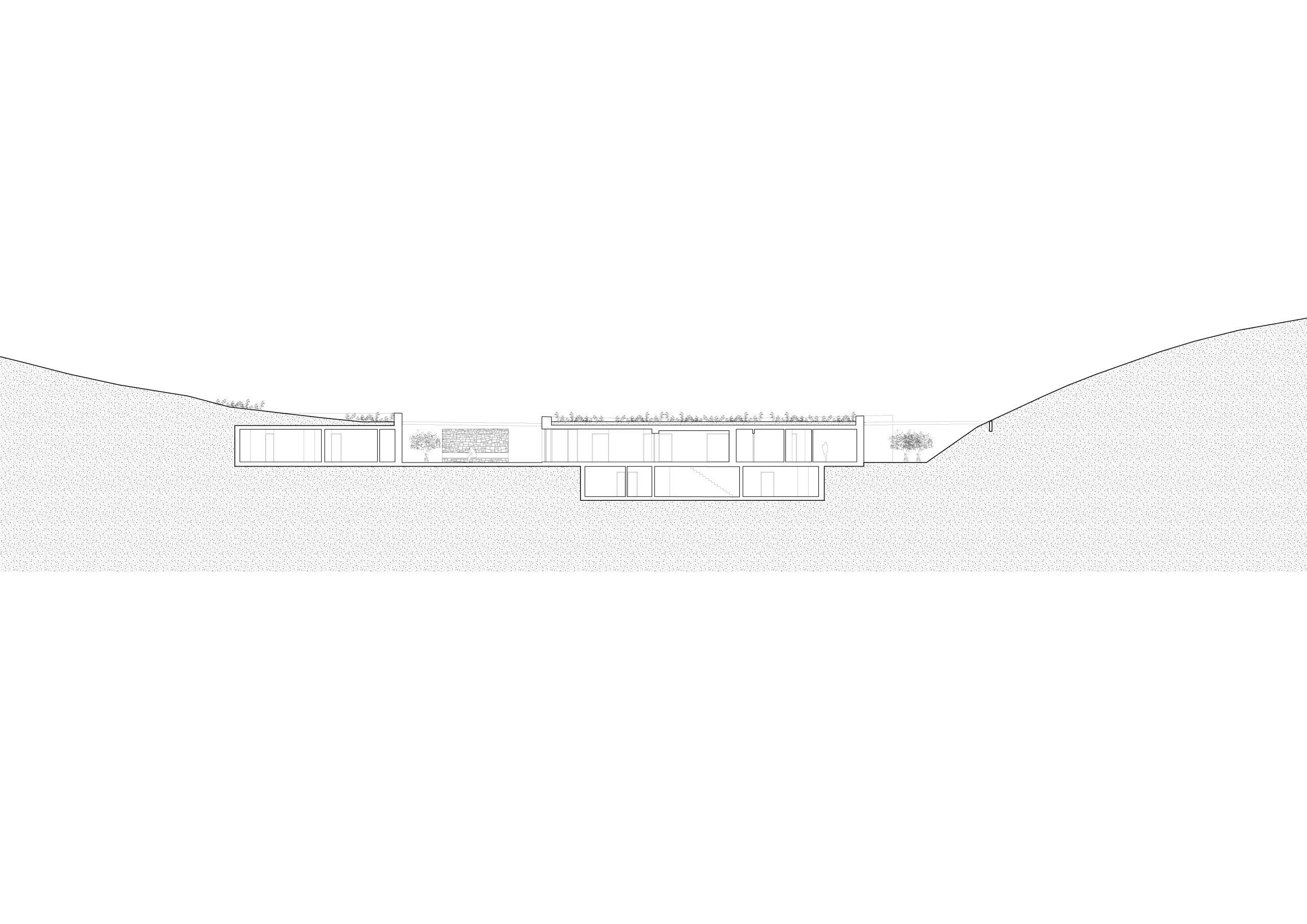
The house is organised into a main single-level residence and a partially subterranean guest house, embedded into the sloping land. This strategy minimises excavation, preserves the natural relief, and reduces the visual impact of the building within the landscape. The overall composition follows the site’s contours, creating a sequence of spaces that remain closely connected to the ground.
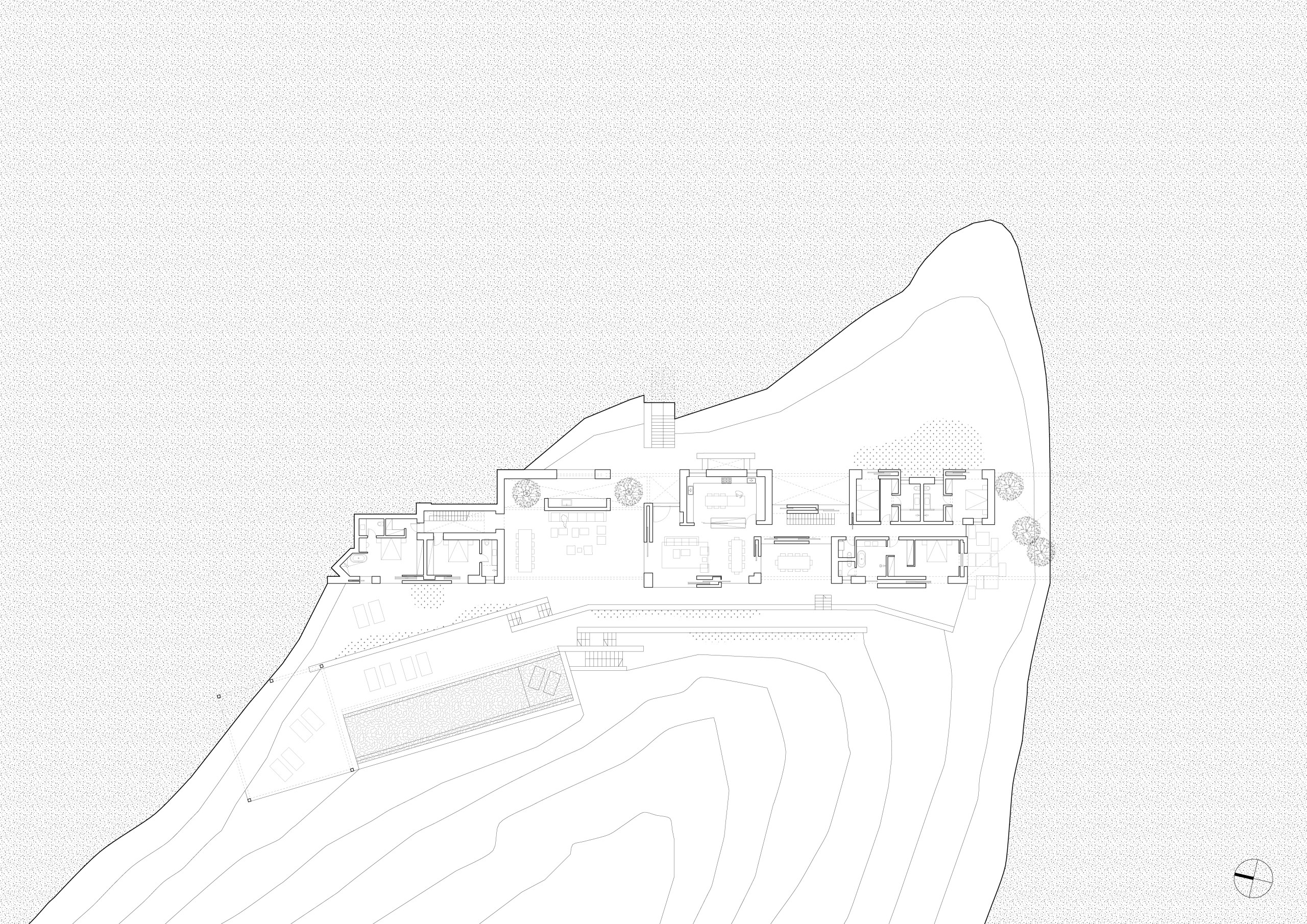
Programmatically, the residence is divided into three clear zones.
The northern part accommodates a ground-level guest house with a planted roof.
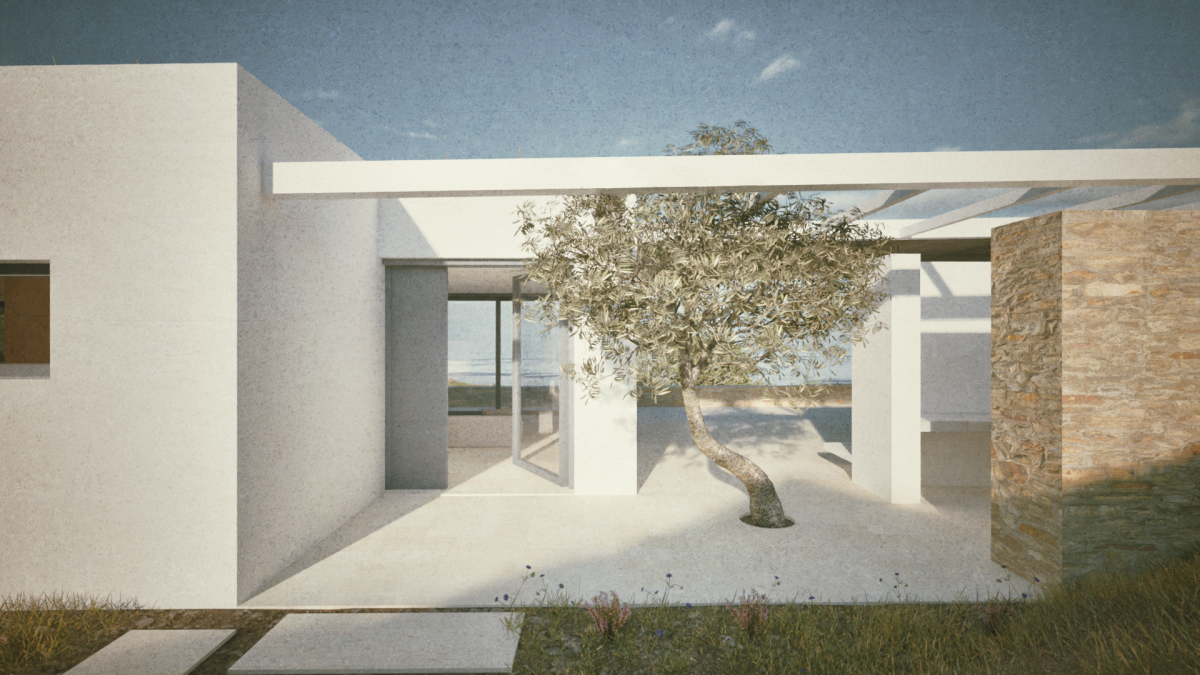
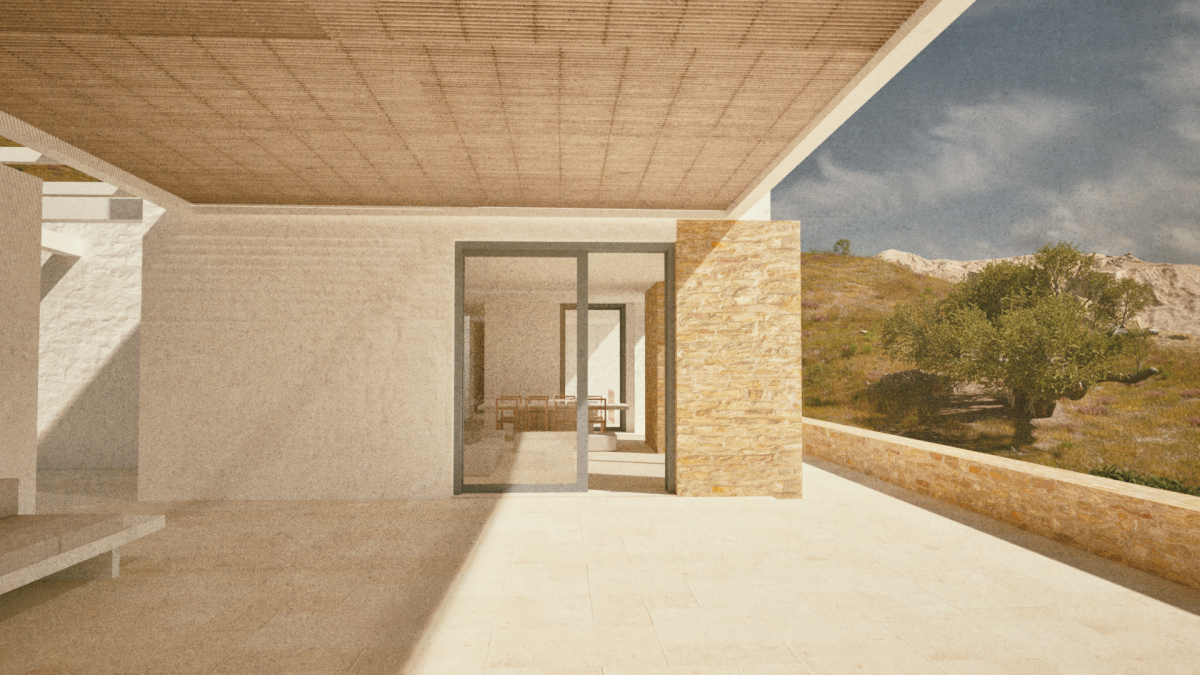
The central zone contains the main residence, where living spaces open directly to the exterior, while bedrooms are positioned to ensure privacy and autonomy.
The southern part consists of a subterranean guest volume integrated into the inclined terrain. These areas are connected through a circulation spine and stair, allowing movement across the site while maintaining functional separation.
Environmental performance is integral to the design. Planted roofs, thermal insulation without thermal bridges, cross-ventilation, and shading strategies enhance interior comfort, while photovoltaic panels support energy autonomy. The exclusive use of local materials reinforces the building’s connection to place and reduces its environmental footprint.
Ravine House proposes a residential architecture shaped by landscape, where spatial organisation, material choices, and environmental strategies emerge directly from the site’s conditions.