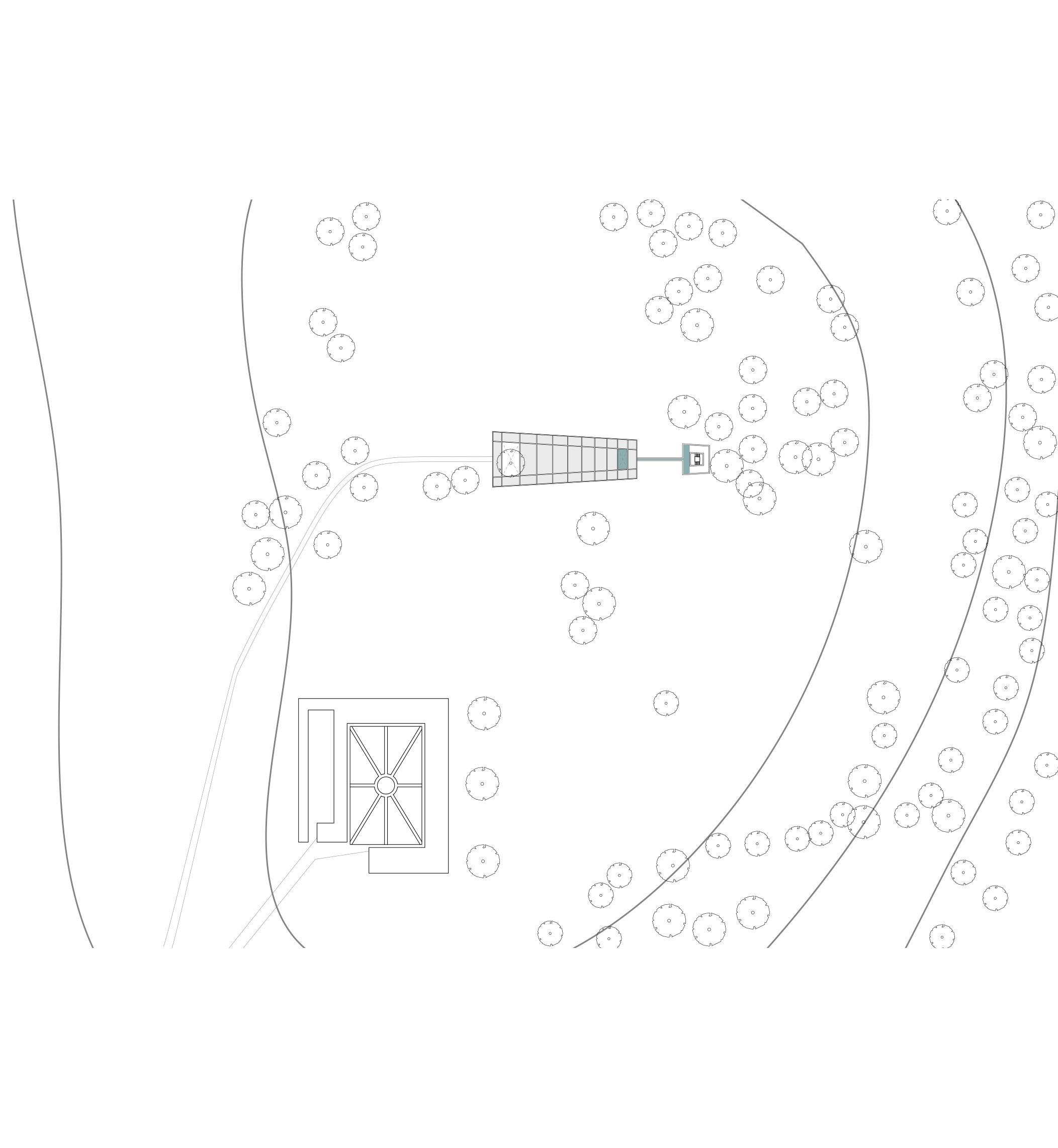
 Site Plan
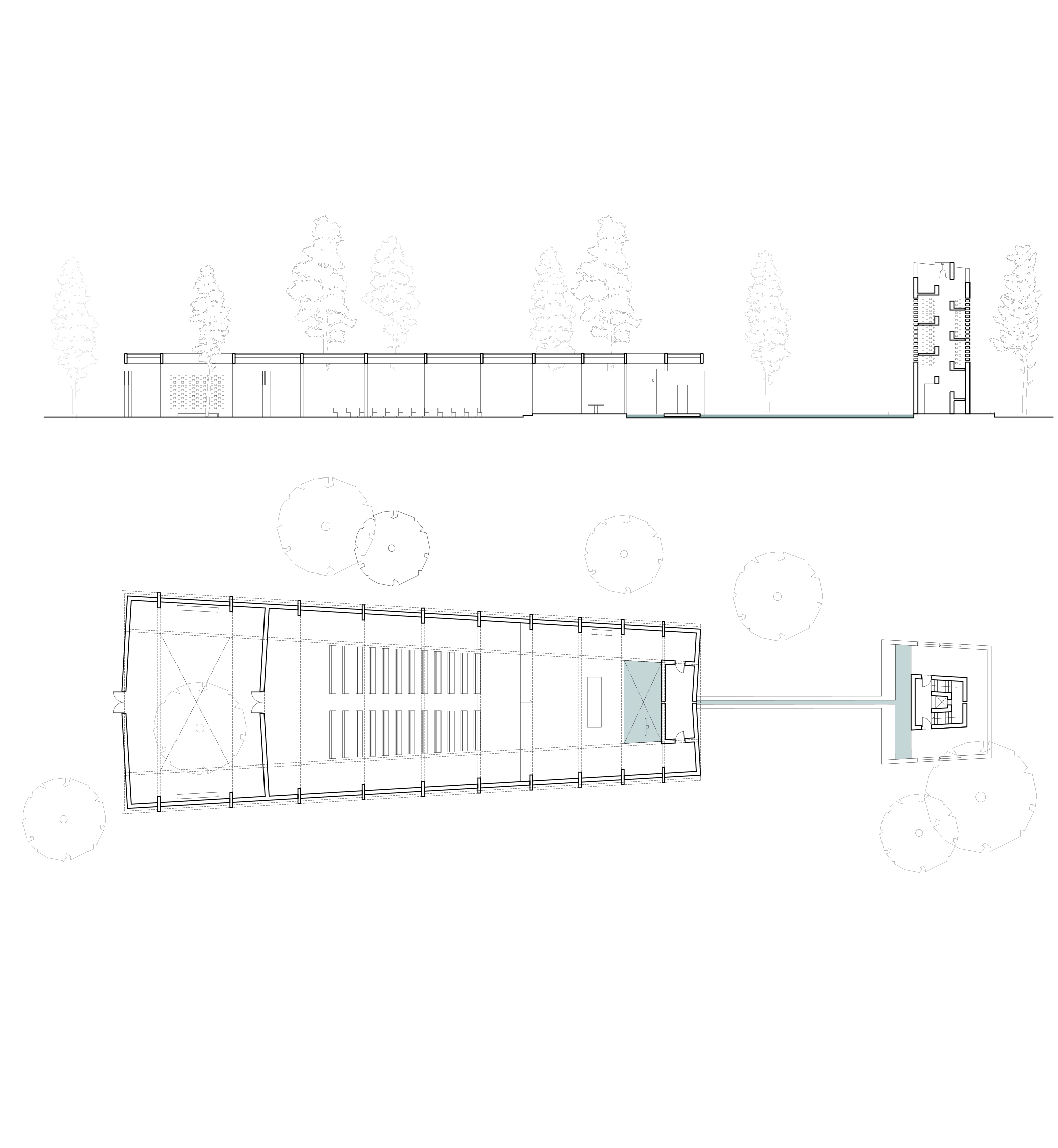 Longitudal Section and Plan of Ground Level
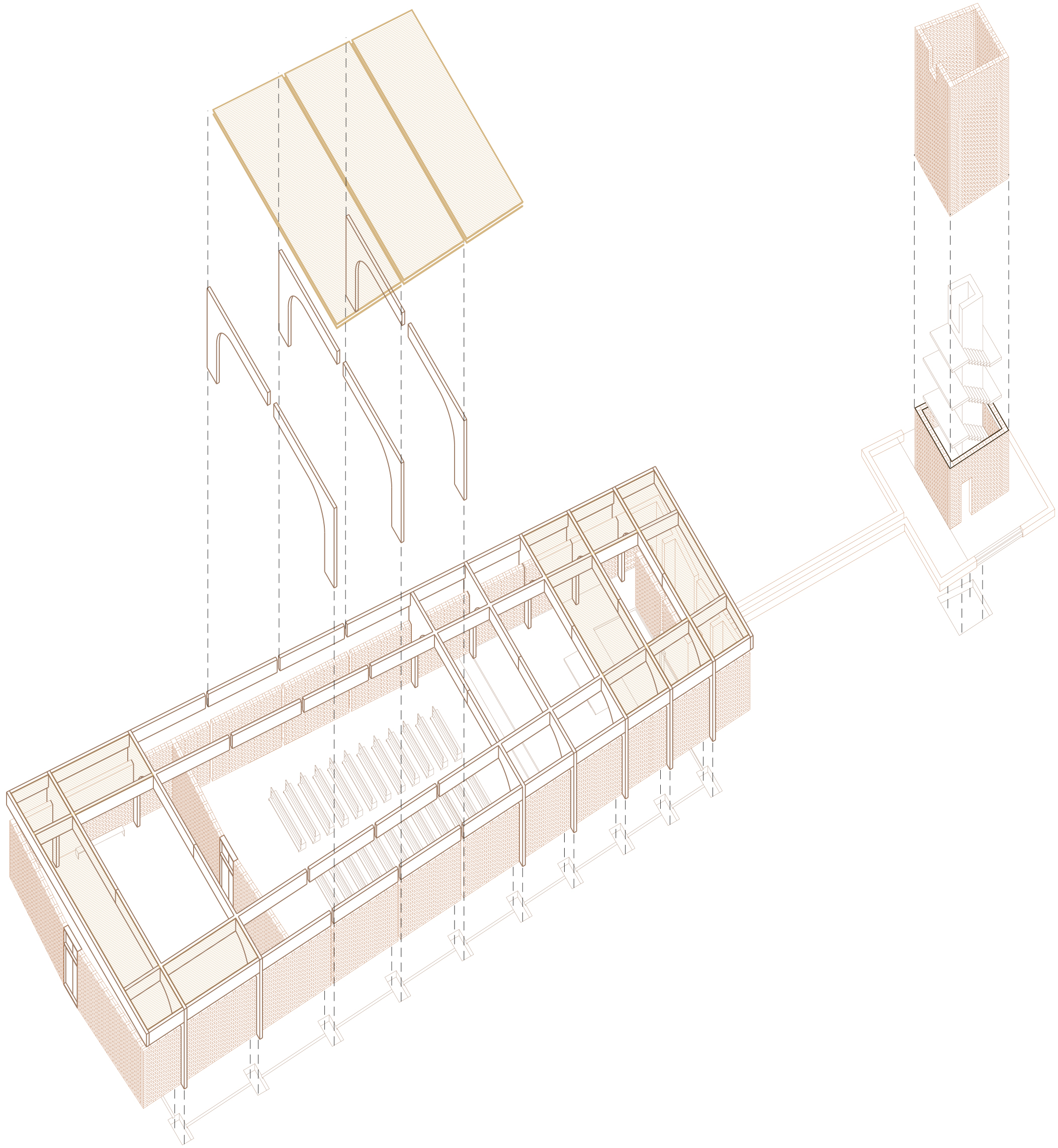 Axonometric View
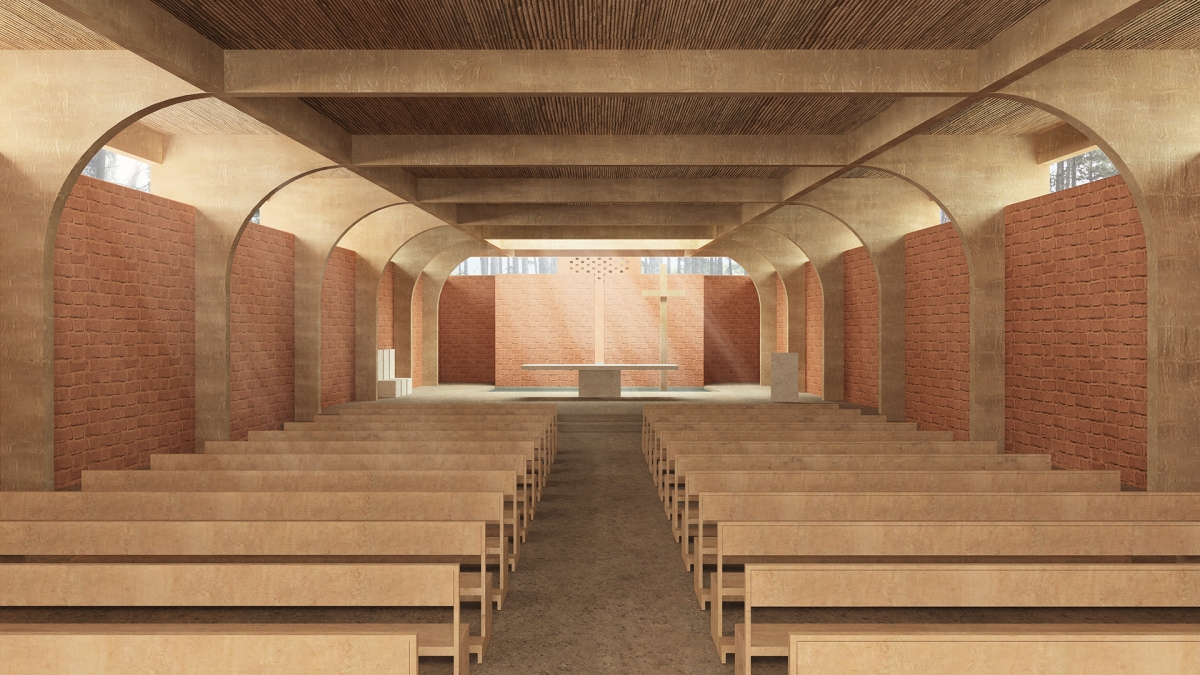
The Rwanda Chapel is conceived as a place of unity—between people and land, between the earthly and the spiritual.
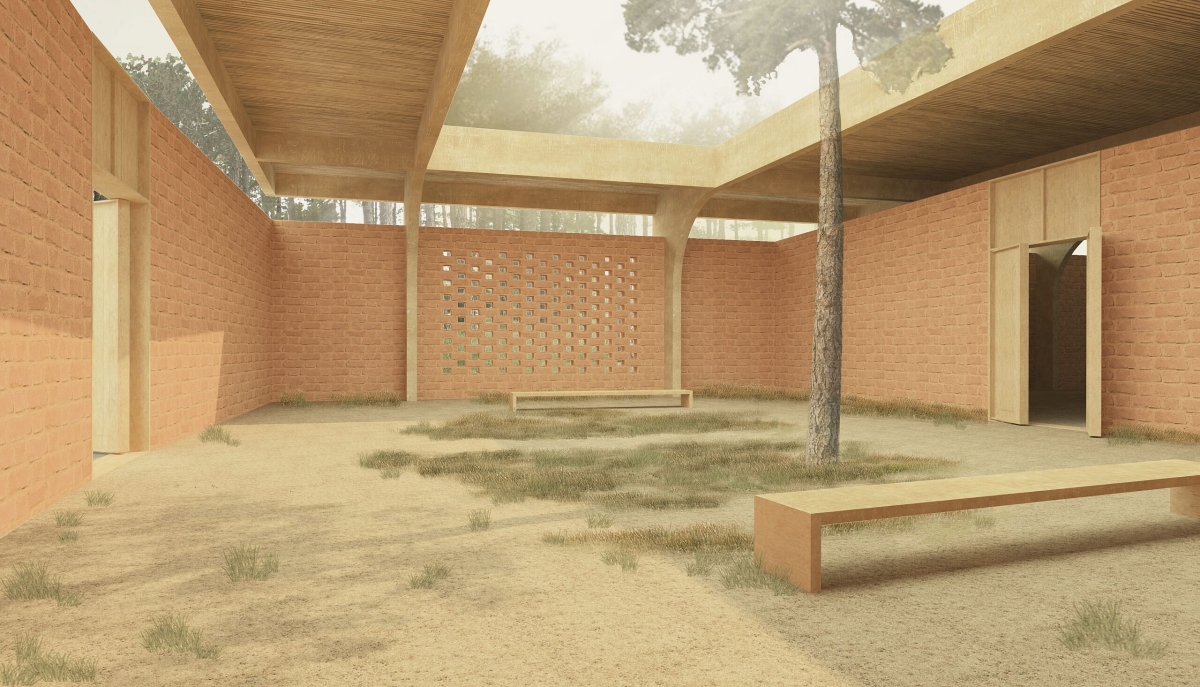
A continuous perimeter wall constructed from clay bricks produced with local soil defines the atrium, nave, and presbytery. This earthen enclosure establishes a grounded, tactile presence, anchoring the chapel within its landscape and cultural context.
Above, a timber canopy provides shelter while allowing light, air, and rain to enter the space through a sequence of open atriums. The interplay between enclosure and openness creates a rhythm of gathering and contemplation.
Together, the earthen wall and the wooden canopy form a simple yet resonant architectural structure. The chapel is both intimate and collective, rooted in the land while opening upward—an architecture shaped by material, ritual, and belonging.